This is some writing I did back in 2012, when I was working for the Staten Island Zoo in New York. It was a dream in some ways, but I had felt a constant tension between the vital role they play in offering access to nature for all people, and the ethical implications of keeping wild animals in captivity. It’s a tension that has really never gone away for me, and it’s fun to revisit this writing. It also highlights one of my resounding philosophical interests – understanding how people connect with animals. As someone who’s major dream of a superpower has always been talking to or transforming into animals (to hang out with them – duh!), I’ve always been fascinated by the people whose lives revolve around animals. This was part of a setup for a documentary series. YouTube series, anyone? When I sent it to my dad, he said “Keep going. You never know where it will take you”. It’s fun to revisit that very sparse, dad-like (but sound) advice now.
Written by me and sent to my dad and a few trusted friends, 2/21/2012

This past fall, I got a job at the Staten Island Zoo. Being an avid animal lover, scientist, and teacher, I was thrilled to get my foot in the door of the Zoo-niverse. Now, as anyone who knows anything about zoos will tell you, the animal business is riddled with social, financial, ethical, conservationist, and scientific controversy.
Is it right to keep wild animals captive? Which animals are suitable for this? How much space do they need? Should keepers and the public be allowed to interact with them? Should animals participate in entertainment shows for the public? Is it right for animals to be “on exhibit” all the time? Does it serve a purpose? Are zoos really an effective conservation tool? Can zoos make money and still put animal welfare first? Can people learn to care about wildlife without seeing animals in person? Are zoos “practicing what they preach” and functioning as sustainable, environmentally-friendly businesses? Should zoo animals ever be “retired”? If so, where do they go? Can and should captive animals ever be returned to the wild? Should zoos breed wild animals, and if so, for which purpose?
The list of questions goes on and on, and the response to each can continue for even longer. Any business (for-profit or not) that keeps wild animals has the ethical and moral obligation to seek answers to these questions. Unfortunately, the zoo business is often found to be conservatively unchanging, filled with an inertia based on self-preservation. All too often, there’s an “if it ain’t broke, don’t fix it” attitude permeating the bureaucracy of zoo boards and upper management. Mix that with hard economic times, a constant struggle for funding, and (sometimes stubbornly) passionate employees, and changing zoo policy quickly becomes like wrangling a banana from a bunch of hungry spider monkeys. (Told you I was a nerd)
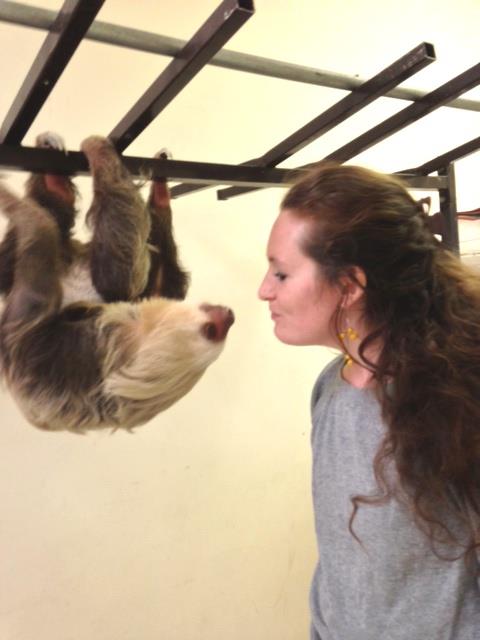
As a young animal lover trying to carve out my place on this planet and make a positive, progressive contribution to the world, I started doing research. To really understand the business and find room for improvement and trends, I dove into my zoo’s library and began reading everything I could. This led me to the recorded history of my zoo, which was at times both progressive and wildly popular.
The Staten Island Zoo, inaugurated in 1936, has a fascinating history of zoological firsts, unique animal collections, longevity records, and educational initiatives with multiple years of zoo attendance over one million, which is remarkable for an 8-acre institution. It was one of the first zoos to highlight a reptile collection, was proud to employ the first full time female zoo veterinarian in the country, and was one of the first zoos to incorporate Education into its mission statement. (Ken Kawata’s New York’s Biggest Little Zoo makes great reading material). Through this book, I learned an important lesson:
Zoos have to constantly change in order to remain relevant.
At all times, zoos have a multitude of pressures, constraints, limitations, and expectations to which they must respond. The order of importance is not to be based on the order in which I list them, because of course, like all businesses, their priorities depend on who’s in charge, and who’s paying the bills.
Animal Welfare: Zoos of course are charged with the health and well-being of their collections, which is zoo-speak for the animals they keep. They are subject to international, national, state, and local laws governing animal welfare, as well as the scrutiny of accreditation organizations. In the US, this means the American Zoological Association, or AZA. And this is no simple matter, either. There are many schools of thought on the care and well-being of many different animals, and many different definitions of what that even means. A lot of husbandry knowledge is passed down within institutions from weathered keepers to the newbies, and although communication between zoos is better than ever, much of the knowledge is “industry secret”. Besides the fundamental ethical reasons for keeping animals healthy, zoos have to consider medical costs, losses occurred from replenishing animal collections, and public perception of their animal care.
Money, Money, Money: Whether for-profit or non, all zoos struggle with finances. The cost of operations are exorbitant. You know how much it takes to feed one kid? Imagine hundreds or even thousands of hungry mouths, all demanding healthy, fresh fruits and vegetables, tons of raw meat, specialized animal prepared diets, vitamins, minerals, and supplements. Then imagine the cost of cleaning supplies, utility bills, waste disposal, and keeper salaries (which, by the way, are some of the lowest in the institution!). Add the price of animals (which can run in the double-digit thousands), medical bills, insurance, maintenance and operations staff, and administrative salaries. The San Diego Zoo (granted, a humongous institution) spends 150 million dollars a year on operational costs alone.** (Note: These numbers are from 2012!) This is completely separate from capital improvement projects, which run in the millions and up, and include improvements to exhibits, grounds, buildings, and infrastructure. Zoos get funding from local governments and private donors, but the big money mostly goes towards capital improvement projects. Much less donor money gets allocated towards operational costs, so zoos are always scrambling to be self-supporting, even if only partially. **
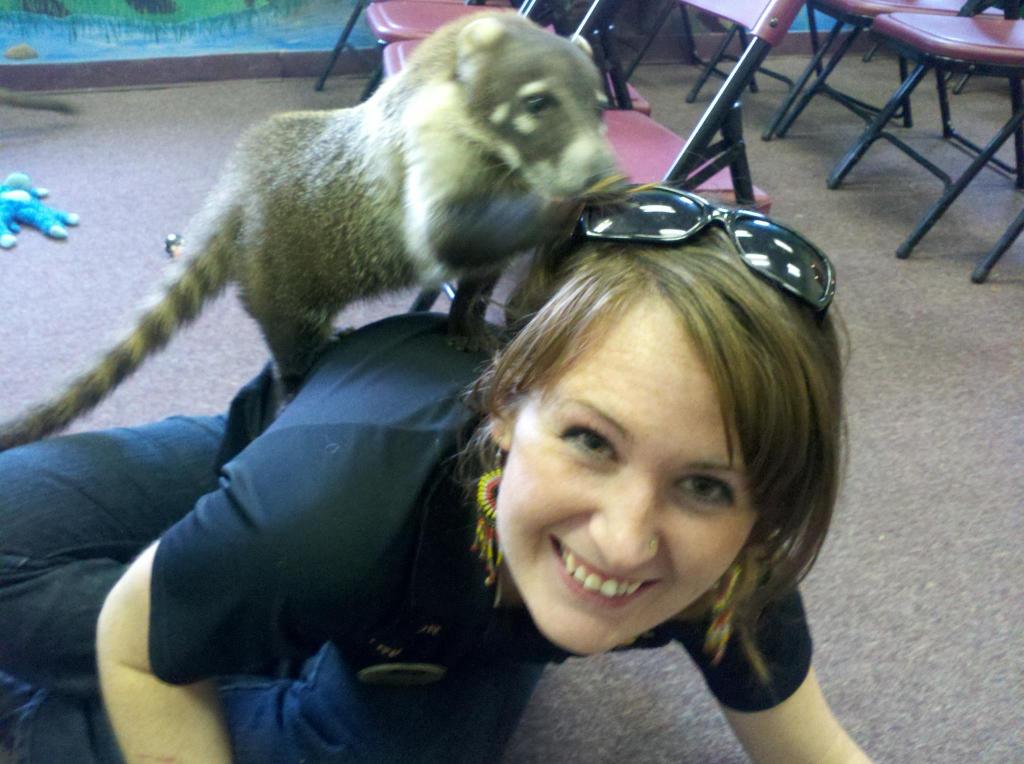
Attendance: I was once told by a wise and well-respected herpetologist (Romulus Whitaker) that “Conservation is 90% circus and 10% science.”** Now, some zoos are more “circus” than others, but what this really means, is that the most important part of the zoo business is people. Zoos without people are merely private animal collections, and though they may satisfy the needs of the individual animals, they do nothing to affect public opinion or the welfare of animals in general. Increasing attendance is the backbone of most zoo decisions, present in everything from animal acquisitions to exhibit design, zoo cafe food offerings to special events and educational programs.
Regulation And Accreditation: To gain the respect of the industry and (often) of the public, zoos must be in compliance with a number of international, federal, state, and local regulations, as well as the animal management policies from the AZA and other accreditation organizations. Remember how there are many opinions on the ways to care for animals? This means that zoos, in many cases, must be constantly adapting to changing regulations and management policies.
Governing Bodies: Most zoos have zoo boards, which hold the highest authority within the institution. Oftentimes, these upper administrative positions are filled by “non-animal” people. People from the marketing, financial, and business sectors can often be seen filling the zoo Director seat, and even more often on zoo boards. This is necessary, to an extent, as they contribute a vital business perspective to maintaining a successful zoo. Things can get sticky, however, when animal-related decisions fall under the jurisdiction of “non-animal” people. And since passions run high when it comes to animals, there is often a difficult disjoint between upper management and the keepers.
Employees, Interns, and Volunteers: Volunteers and interns are absolutely vital to the zoo business. Zoos would not be able to afford the number of employees it would take to run a zoo without them, and since many people love animals, work comes cheap. Docents and other zoo volunteers will work without pay to help out a cause they care for, and especially for the chance to be around wild animals to which they would otherwise have no access. It’s a fair trade in some ways, though I don’t believe in working for free. Opinions aside, to get a zoo to function successfully, a wide range of personalities, passions, and needs must be met. A successful zoo is truly a well-oiled machine, which relies in some way or other on each of its parts.
Conservation: Zoos have the responsibility of being, if not literally, at least for appearances sake, the vanguards of conservation. They are all-too-often considered the “experts” on animal welfare and conservation, though in all honesty, few zoos participate in wildlife research or conservation projects outside of their perimeters. Many zoos have animals in “Species Survival Programs” (SSP), which means that the animal’s genetics are monitored and any breeding is closely controlled to protect genetic diversity and prevent inbreeding. Even with breeding programs, however, very few captive-born animals are ever returned to the wild.
On top of these concerns, (which in reality are only a fraction of what zoos must manage), zoos nowadays already have a number of issues. For example, it is getting more and more difficult for zoos to maintain and grow their attendance, especially in a hard economy.
Zoos have to compete with television and the internet. People can go to YouTube and watch a million HD videos of any animal they can think of. They can read about them on a million websites and access scholars all over the world with the click of a button. Is it possible that zoos have lost a chunk of attendance to the internet? They certainly will in the future, if it hasn’t happened already. And at the very least, zoo patrons are now harder to impress. If this is the case, what would it say about the future of zoos?
Follow this logic. If zoo attendance went down because of the internet, then zoos were only providing what the internet can provide, which is a virtual experience viewing an animal behind glass (or a screen). It follows that zoos, or aspects of them, are replaceable by the internet and lacking anything that a computer can’t provide, which is simply visual stimulation of a simulated scene.
If technology has caught up with society and made something obsolete, then society should evolve. This is progress. This is evolution. And the time has come for zoos, and our relationships with animals, to evolve.
________________
With the daring confidence of my prediction and prognosis, I am left in return, a giant question. What is an evolved zoo? What is the future of the zoo, and how do we want to express our relationship with nature to our children? To answer this question, we have to look deep. We need to understand the function of zoos in our society today, and what we want their function to be in the future. We need experts in the animal world: people who observe them in the wild, people who keep them in captivity, people who care for and study their physical, mental, social, and emotional needs. We need to study habitats and the greater connections of the ecology we affect with zoos. We also need to look at the way people learn, and the factors in our society that conflict with a positive relationship to the natural world. Mostly, we need to look to nature for the model.
Follow me as we interview scientists, zoologists, psychologists, conservationists, environmentalists, educators, and more on this journey to answer the question, What is the evolved zoo? What is our modern alternative to animals-on-display, and what is the future of our relationship with nature?
 Exploring the Universe
Leave a comment