This is from 17 years ago! –>Travel writer and student of the universe, Megan took off with her pet rabbit and a few possessions in her 16-year-old VW Cabriolet to explore America. Follow her adventures for fun travel tips and ideas!
Hello all – I know I am really procrastinating on the Greece posts. I promise, they’re coming! It was an incredible time and I’m phenomenally gratefully to Niki for opening up her life to Sunny and I in that way… we got to learn about her family’s history and culture on Ios island, visit the beach nearly every day, rekindle a lot of my marine biology life, have a momentous joyful parent moment in seeing Sunny learn how to swim, and have WEEKS to feel like a normal human who just has nearly unlimited time to talk to her friend while also doing minor chores and tasks, cooking, hanging out, and generally just deciding what to do each day. Joyful.
But… before we get to that –
Here we are again! I’m moving! (Sarcastic YAYYYYYY!) But despite it marking my 12th move in 10 years (and plenty before that – read about them all in an upcoming post!), it does feel exciting as well. My sister Marlie and I are renting a house together. A really nice house, with a sunroom! I’ll get to live the dream of having a gorgeous, plant-filled interior jungle where I can lounge around and watch my tortoise slowly walk around his giant tank. (It’s pretty sweet as far as tortoise setups go, bested only by landscaped and water-featured zoo exhibits. It’s coming one day, Dozey!) Marlie will no longer have to worry about a long work or family-visit commute, I’ll have some extra hands on deck with Sunny, and we’ll both get to have the fun (and weird, maybe?) experience of living with an adult sibling. And due to Denver’s insane real estate market, it’s generally a better option than buying right now, and she and I together can essentially pay what we’ve been paying for 2, 1-br apartments, and instead have a private residence, giant yard, and a karaoke room. It’s going to be a fun year!
The timing should be decent as far as moves go. We sign and have the ability to move into the new house on Sept 15, and I have until Sept 30 to get my apartment cleaned out. Since it’s only a 10 minute drive away, I imagine myself doing a load or two each day after work in my own truck, and more on the weekends. Still… I’ve done enough moving to know that it always takes far longer and is far more annoying than you expect it to be. But this time… I am coming with a plan. I have a system!
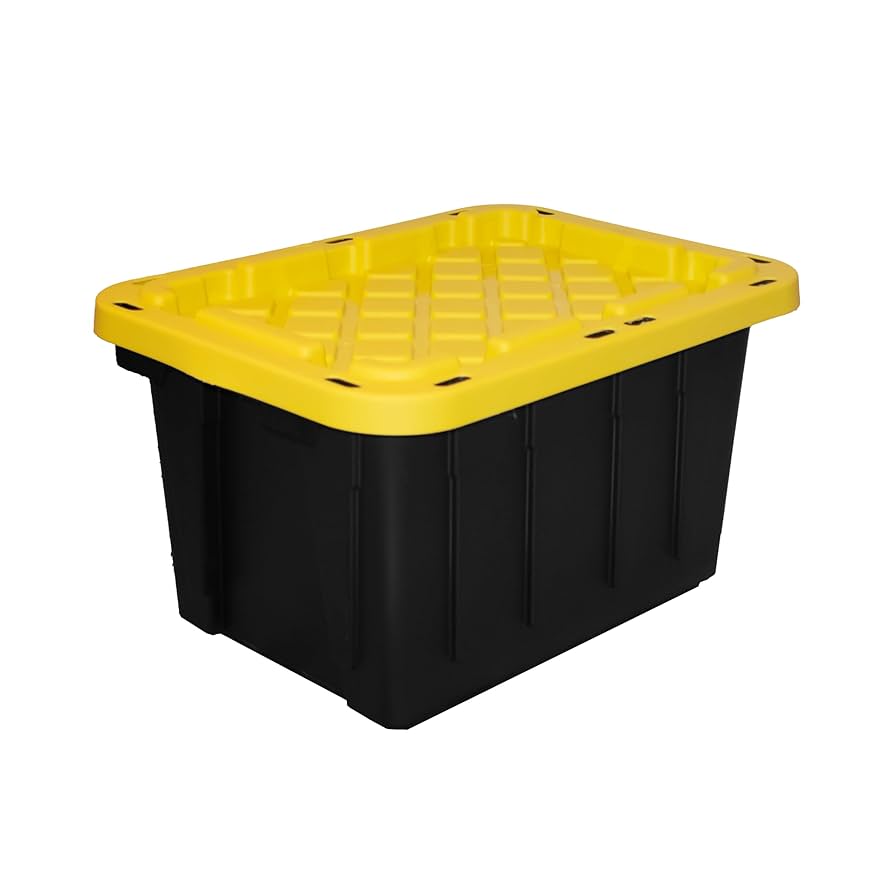
In the last few moves, I have come to believe that HDX Tough Totes (or whatever Brand’s equivalent) are a girl’s best friend. I don’t love the hassle of cardboard. Though the cost is low or free, you have to find it and then do something with it afterwards. It’s not great for heavy things like books and kitchen wares. It’s awkward to carry the boxes, if you’re like me and not yet at the stage in life to hire movers. Other less expensive storage totes are also not ideal. Nearly every clear, plastic tote I’ve found eventually ends up breaking, with the plastic becoming brittle when it’s too hot or too cold. They’re not always stackable, lids seem hard to stay on, etc.
The Tough Totes, however, allow you to pack things in them, are sturdy and stackable, and can be used as long-term storage after the move. The internet is full of great plans for racks for them. I’ve used them pretty faithfully in the last few moves, but most are already storing things in them or scattered since my divorce.
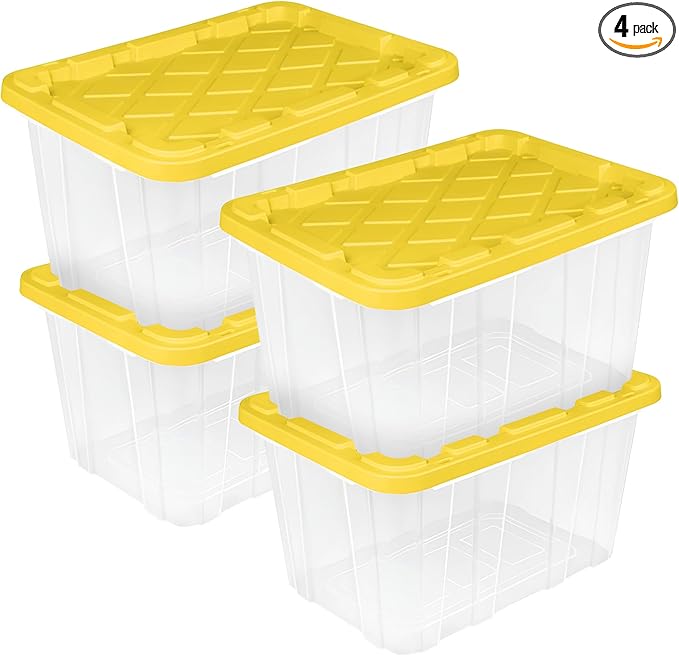
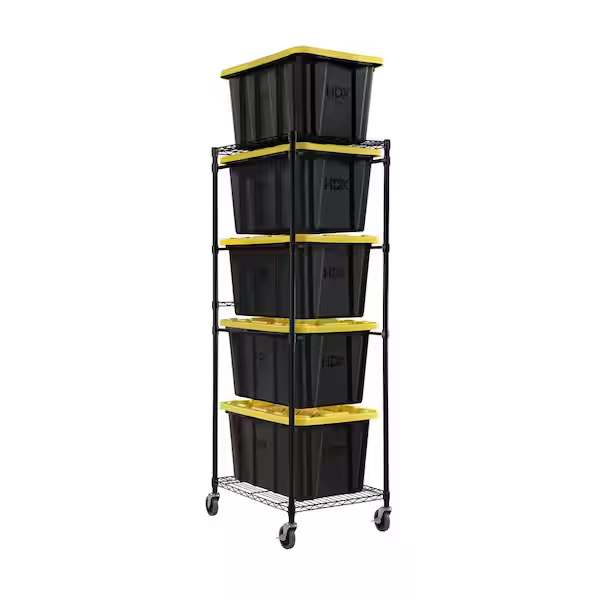
And I thought to myself, the only thing that would make Tough Totes better would be if they came in a clear variety. So I searched the interwebs and found that in fact, they now come in clear! I dragged Sunny out to the store to see if they actually seemed as sturdy as the originals, and they did. I ended up purchasing 10 of them, plus two sturdy metal racks on great casters, and will attempt to pack most of my life into them. I’ll be able to roll them right out of my apartment, onto the elevator, and into the truck when the time comes.
Going to roll ’em right into the elevator!
So wish me luck on another “untethering”… sorting through all of my things, and deciding what stays behind in the BEFORE NOW part of my life, and what comes with my into the next phase. It’s uncharted territory in many ways, though I like to think that I’m much older and wiser this time. I’ll report back in a few weeks when we’re all through!
Trigger warning: This story recounts the experience of the death of a parent.
As my sisters reminded me this morning, today would have been my dad’s 70th birthday. He died more than 10 years ago, when he was 59 years old. This was the first, and one of the worst, tragic events of my life. In those 10 years, I have never felt ready to purposely think through and process the events of his death, and the impact it has had on my life since then. Even thinking about it now makes my heart race. I feel nervous to go back there. However, this date, and my recent commitment to processing through writing, comes to me as a challenge… a call to finally give myself a squeeze, know that I am now, more than ever, equipped to deal with this, and to take a look.
If you haven’t experienced grief, it can sometimes feel like an object on fire – too hot to touch, and too bright to look at. My mom’s death, which happened only 3 years ago, still feels molten, like glowing metal freshly pulled out of the forge. When it comes into my field of vision, I still get the urge to look away, or at least to only peer at it out of the corner of my eye. But with my dad, it’s been 10 years. It feels more like the embers of a huge fire, where it looks like it’s put out on the surface, but when you dig down, you find that there are still glowing coals underneath.
In my house in South Dakota, I had a fireplace insert, and would use it to heat the home through the winter with wood. On cold nights, we’d set a lot of wood inside, with the hopes that by the end of the night, the right amount of ash would have built up on top of the remnants of wood so that it would slow their burn. Those coals would be insulated enough to retain the high heat needed for ignition, but starved of just enough oxygen to slow their smoulder. In the early morning when I would wake up, if we were lucky, I’d find a pile of what looked like ash, but dig around underneath to find coals still hot enough to reignite once they got an infusion of oxygen and new wood on top.
Thinking back on my grief over the loss of my dad, I’ve done something similar these past 10 years. I’ve let other things pile on top, insulating the embers just enough to let them retain their slow burn, but never giving them enough oxygen to flare up and burn out. In treating it this way, I’ve held onto the grief, preserving it in a state where it’s almost always ready to burn up again if given enough oxygen.
Buried coals can be dangerous. Responsible campers know that you cannot fully tell if the fire is out by just feeling whether heat is rising off the top, and will douse water on the remnants to ensure it is extinguished. If hot coals are buried underneath, and wind blows ashes off of the top, exposing the coals to oxygen in the process, a fire can easily reignite. Grief can work the same way. You pile things on top, get busy and forget they’re there. But at some point, either life settles down, or you purposely start decluttering the things you’ve piled on top, and whether you’re ready or not, the fire needs to be tended again.
So what parts of my grief over my dad have remained “hottest”? I think back to the moment I found out. I had just gotten out of class at University of Miami – Practical Computing for Biologists – and looked at my phone and noticed many missed calls from my sister. (I didn’t yet have the anxiety that I now feel when I get multiple phone calls from family members). I don’t remember how the conversation started, but I remember it included,
“Where are you right now?”
“What are you doing?”
“Dad had a heart attack.” and
“Meg, he’s gone”.
And the finality of those last words. And dropping to the ground and just… wailing. The feeling of falling with no control and nothing to grab onto. And frantically searching my brain for the path that proved what she said to be wrong. And the instant knowledge of something bigger than us. Being like a baby in a crib with no way to reach something on a high shelf – seeing it and knowing it’s there, with no way to control the outcome. And the feeling that every second that passed was a second further from him being alive.
After what may have been 2 or 20 minutes on the phone, on the ground, wailing, with my sister on the other end, she told me I needed to get someone to drive me and to get to Nancy’s, where Dad still was. And stumbling up the stairs to the classroom I just left, flinging open the door, and sobbing, “I need a ride. I need someone to drive me”… then choking out, “My dad just died”. And the horrified look on my professor’s face, and the stunned silence in the room. After what felt like a very long pause, a classmate finally jumped up and said, “I can, let’s go.” (Thank you, Tara, for this kindness on a terrible day).
These images are seared into my mind, and may be there forever.
And the rest is a blur. I have very little recollection of the 30 minute drive north, but thinking about it now, it must have been almost as horrible for Tara as it was for me. I don’t remember walking in, but I remember hugging Nancy, her sons, and everyone telling me that if I wanted to see him, I needed to prepare myself to go into the room where he died, where he was still in bed. I remember the boys supporting me on either side as we walked into the room, and I saw him lying there, and feeling all strength leave my body as they held me up. He was lying in bed, and looked to be still asleep.
I have no clue what the value of going in to see him like that was. That is not to say that there was, or wasn’t a value to it. Maybe it helped me to face and accept the reality of the situation, that my dad was just… no longer alive.
His death was entirely unexpected. (As unexpected as it can be, knowing that at some point, it will come for all of us). I was 26 at the time, and had, 3 weeks prior, moved out after a year of living with him and Nancy in Miami. I was attending graduate school at University of Miami, studying marine biology, and living an absolute dream of a mid-twenties life. I was scuba diving every day, living close to amazing friends, making music daily as a member of a thriving Miami band, and had just moved into an iconic, magical Coconut Grove home.
Things were not perfect… despite the amazing daily tasks, there was some real negativity at my job and I did not have the tools to handle it in ways I might have been able to today. I had very little relationship with my mom, who was deeply struggling with alcoholism and in and out of rehab. (Both of those things are topics for another day). But despite that, I was deeply embedded into the world around me and feeling, experiencing, and learning a huge number of amazing things.
Before his death, I had begun feeling an incredible satisfaction and closeness one may experience with a parent when, as a young adult, you find that you share some of the same hobbies and interests with them. And sometimes you even get to give back — to share, teach, or guide them in return. A few months before his death, I had the epitome of this experience captured in one perfect day.
In pursuit of my master’s degree, I had gained many field skills—I was a certified boat operator for the National Park Service, skilled at navigating the tricky shallows of Biscayne Bay, and doing all sorts of interesting work both above and below the water. One day, he was able to join me as a park volunteer.
We set out, and I captained the boat across Biscayne Bay to conduct snorkel surveys and other park work along the mangrove keys. The weather was comfortable, the water was glassy, and I had the distinct sensation that time had stopped. For a moment, it felt like we were not just parent and child with histories and imperfections and dynamics, but just two people sitting in awe of our good fortune to be there, respect for each other, and acknowledgement of the rareness and meaning of the moment. I remember feeling and thinking, today is perfect.
Ten years later, I still return to this day. It provides calm and strength, and reminds me that despite the pain of his loss, I carry with me a collection of beautiful moments and memories. And those types of fires are always worth tending.
When my Dungeons and Dragon-ing brother Kory texted me a few weeks back that he wanted to take his girls to the Colorado Renaissance Festival, and asked if Sunny and Stelly and I wanted to join, I was secretly excited. (Ok, maybe it wasn’t a secret – I’ve never been great at hiding my dorky hobbies and interests.) I had never been to one before, and though I generally was skeptical about a bunch of strange people fetishizing a time period 600 years ago, I was curious to experience it in person. Plus, I enjoy any excuse to join humans who stop their routines to do unnecessary things. Music festivals? Absolutely. Pretending to need to survive in the wilderness in only what we tote in with us [camping]? Yes, please. Gathering the whole town to celebrate one of any number of strange things that 600 festivals in Colorado celebrate each year? I’m there. Life is short – you gotta have fun, right?
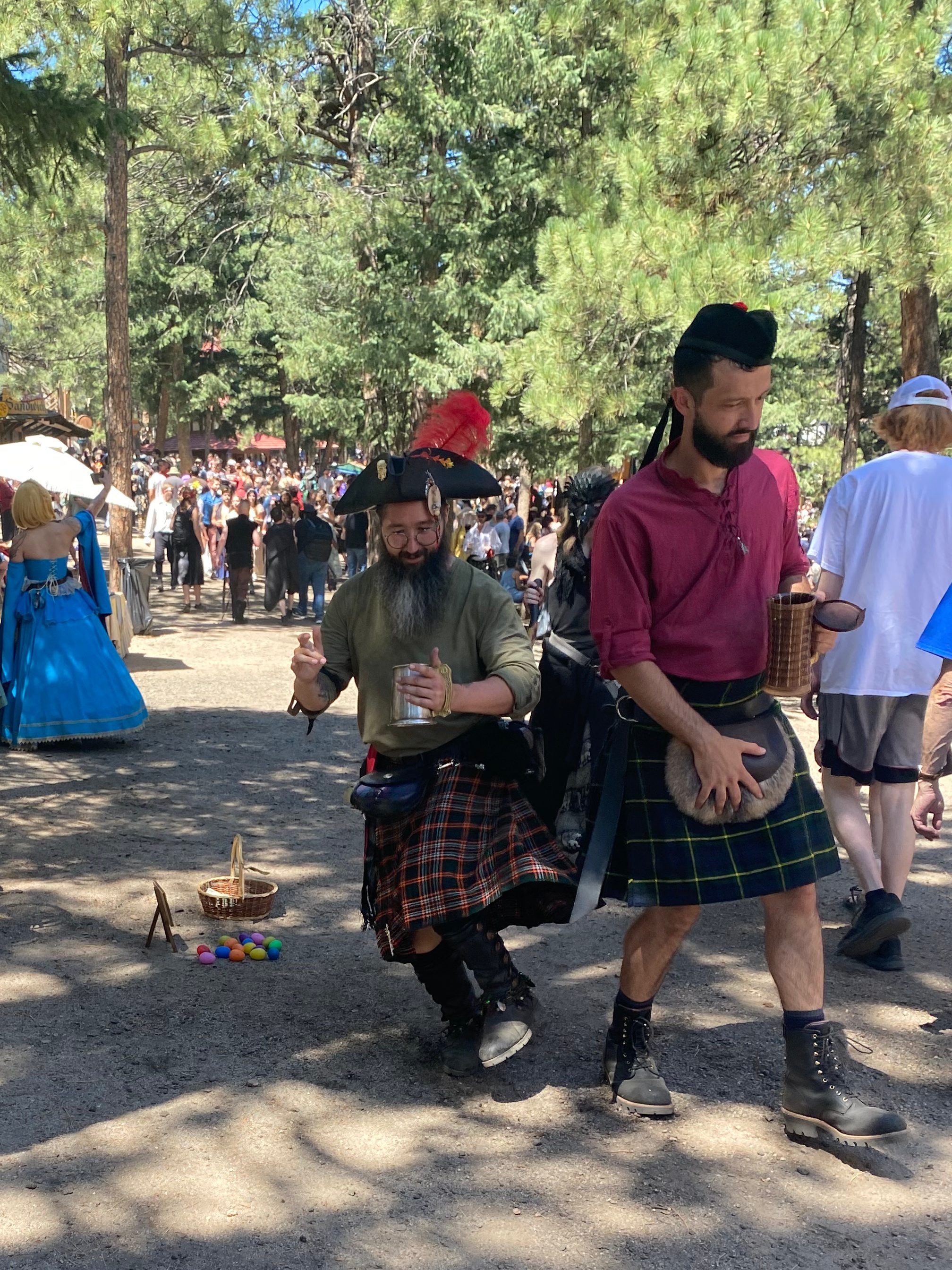
I kinda liked these jaunty jents as they danced by.
But I also felt a little squeamish about it. Like, are we trying to emulate serfdom, and nasty hundreds of years-long wars, medieval torture, lack of sanitation, bubonic plague, and extreme inequality? (Sorry if I’m mixing time periods, history nerds!) It also evokes lots of nausea around other historic re-enactors who fetishize wars, evil people who glorify periods of American history where white supremacy was blatant and upheld through law and culture, and nastiness like a current Department of Homeland Security Facebook post, which displays a photo of John Gast’s painting, American Progress, with the caption, “A Heritage to be proud of, a Homeland worth Defending”. (If you don’t understand the concept of manifest destiny and it’s justification in genocide, go read some books. Oh yeah, and stop banning critical race theory.) In other words, there are tons of terrible people out there who celebrate time periods, ideals, and systems that blatantly elevate some human life above others… and to those who enjoy celebrating that, stay the fuck away from me, thank you very much.
And before everyone gets upset, I understand that Renaissance Festivals are meant for entertainment and fun. And that we get to wear costumes and eat giant turkey legs and see people do fun things like pretend to knock each other off horses with big sticks. And maybe it’s long enough ago where joking around about bubonic plague killing 50 million people is funny? (“Bring out your dead!”… ok, Monty Python’s rendition of it was definitely funny.) The point is, fetishizing history is a risky business, because history is full of all sorts of nastiness.
Now while I don’t propose a real solution to the nastiness of many parts of many humans’ histories around the globe, I have been thinking of some other, more positive parts of the experience. And to illustrate it, I’ll tell you that lately, on the advice of a dating book, I’ve been noting down “things that give me pangs”. You know, pangs in your heart… it may be moments when something brings you to emotions, makes your heart ache, stirs a deep wish, etc. (Read Deeper Dating by Ken Page for more). My list – the things that have given me pangs in the last few months – includes:
Hauntingfly beautiful flow fiddle – celtic music
Early mornings in a village-like setting, with smoke and fog and the smell of campfire
Communicating with animals
The idea of living in a greenhouse (or other dwelling well-integrated into the landscape)
Tiny habitats – imagining little microverses under plants, little creatures living there, etc
Timelapses of plants growing
Freely sharing love – talking deeply about it, getting to the heart of emotions and connections.
Vulnerability
And yes, I already said that I was a dork.
And I’ve been thinking that one of the reasons that Renaissance Festivals may feel enjoyable and natural to some people is that it feels GOOD to exist together in a simpler state of being. Many of us like to gather, prepare and eat food, make music, play games, entertain each other, hang out with animals, and imagine times when we didn’t all go sit in front of sparky boxes all day hitting our fingers on pieces of plastic, and stare at smaller sparky boxes in our pockets for much of the rest of the time.
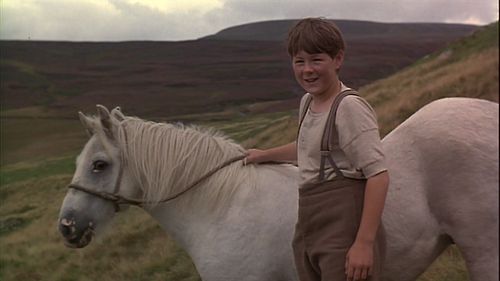
Riding a little Irish pony around with my first love… Dickon from The Secret Garden
And some cultures maintain closeness to these wonderful, human activities better than others. I’ve experienced the same kind of things-that-give-me-pangs at pow wows and various Native ceremonies in the US, family gatherings at overflowing-with-summer-fruits country houses in Armenia, camping trips with my sisters and friends, and in gatherings to visit temples with schoolmates and friends in India. But I think my heart tells me that deep down, I long to ride a little pony around in the Irish countryside and collect plants and hunt small game and drink homemade wines and ciders around a fire while singing and dancing and practicing magic. And why does that seem so out of reach?
And then, there are the RenFest folks. I have to admit that it feels a bit sad to me that, rather than keeping activities that make us feel more human thriving in our daily lives, we resort to visiting a circus-like tourist attraction once a year, buy cheaply-made goods that likely were made in China, and buy shirts that say “wenches love me”. Like our humanity is only ok to celebrate when it is made into a bit of a joke.
While chewing on all of this (and chewing through my 3lb turkey leg), I haven’t quite come up with any solutions, except to say that maybe the answer for me lays with less go-to-the-renaissance-faire, and more gathering with friends, building fires, practicing collecting plants and making good food and drinks, making merry or haunting music with others, and… oh yeah, getting a little pony to ride around the countryside.
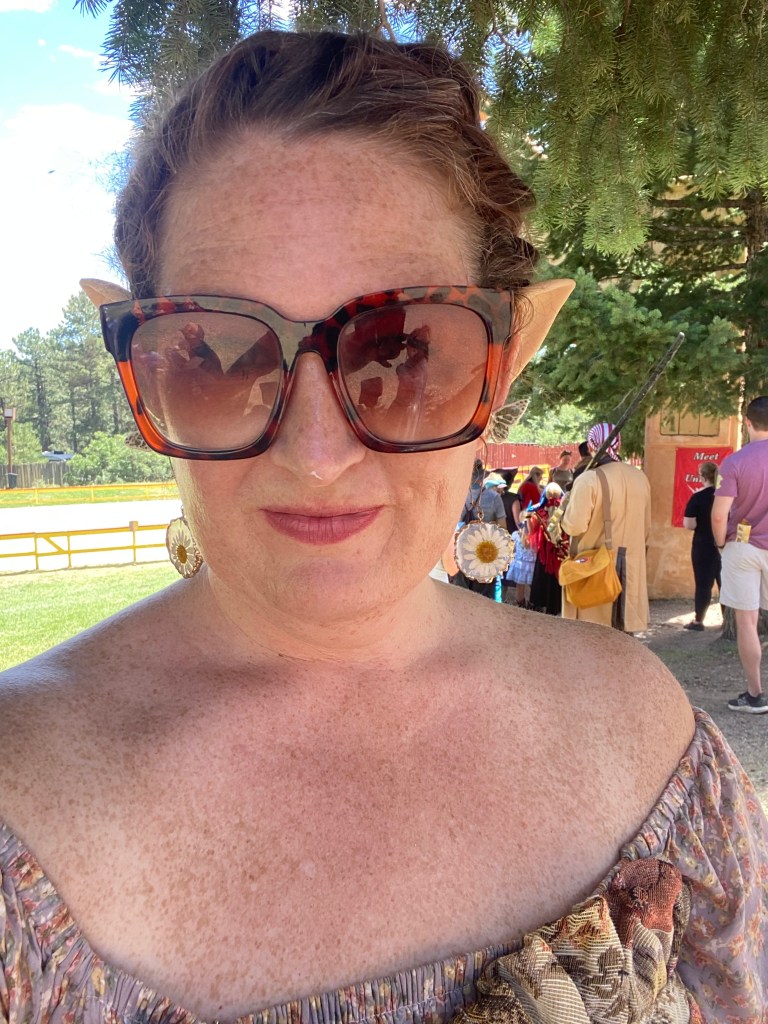
And I do look pretty natural with elf ears, right?
This post is copied from one I wrote in 2013, two months into graduate school at the University of Miami’s Rosenstiel School of Marine and Atmospheric Sciences. Completing my Masters there was an absolute dream. It was also some of my earliest exposure to the idea of science communication – that the science itself is far less meaning if it only ends up published in academic journals. This was a precursor to the much more important idea, that the impacts on and by humans in all of these sciences was a far more important factor. And later, in grad school my second time around, that that the idea of a wilderness and science separate from humans is a tool of settler colonialism – one used to enforce the idea that North America was a vast pristine wilderness, devoid of human inhabitants, ripe for the settling by foreign colonial powers. (If you’re not following the connection, we’ll get there in some later posts).
Marine biology is also a facet of my life that I left suddenly (after the death of my dad, and other events), and that I long for restoring some balance in. For now, enjoy this post from Oct 13, 2013 – The 5 Coolest Things I Learned at ScienceOnline: Oceans!
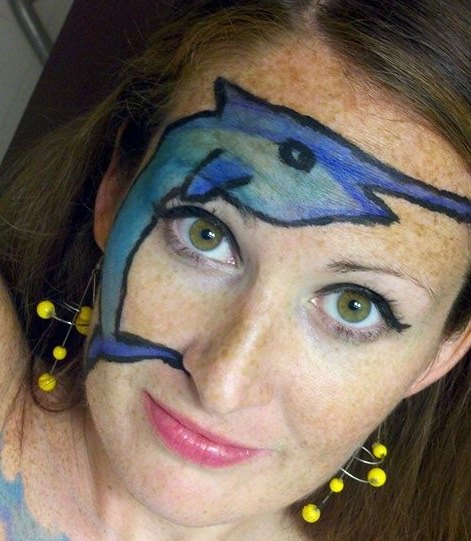
This was from a super fun party at the conference. I had a great dress with a sailfish on it, and had to do the matching facepaint, of course.
It’s Sunday afternoon, and I just returned home from the first ever ScienceOnline Oceans conference. It also happened to be my first ever marine biology conference, having entered graduate school a mere two months ago. The conference, organized by ScienceOnline Executive Director Karen Traphagen and University of Miami’s PhD candidate/shark conservationist extraordinaire David Shiffman, brought together marine scientists, science communicators, filmmakers, journalists, students, bloggers, and other ocean nerdy types for a weekend of discussion, learning, networking, and a hell of a lot of tweeting.
The result: the best, most mind-blowingly awesome educational conversational inspirational conservational crustaceanal (teehee) experience ever! Yes, I’m a newb in this world, and maybe it was just a first-conference high, but I’m pretty blown away, and it seemed like others were as well.
Here are the top things I learned:
1. Holy schmoly, communicating cool science is where it’s at!
Hardcore science is great, and with research and publication being standard metrics of much of our educational and professional success, it can be easy to lose track of the importance of sharing ideas, inspiring curiosity, and facilitating discussion. This weekend reminded that half of the fun of learning “stuff” through science, is sharing it with others!
What’s the fun of discovering a new funny-looking ocean species without seeing memes of it travel around the internet? What’s cool about research on echinoderm digestive systems unless you can write funny and popular articles about butt-munching sea cucumbers? What’s engaging about conservation stats and figures until they used in emotional, entertaining, inspiring eco-films?
The scientists and communicators who straddle the line between research, education, and entertainment are not only having ridiculously good times, but seem to have a pretty wide reach of net positive influence!
2. Networking, Networking, Networking…
Only in my dreams have I gotten to spend a whole weekend bonding with a bunch of other nerds who found Magic School Bus to be a highly influential part of their childhood, or heard a roomful of dreamy sighs when asked how much we all love octopuses. In the short day and a half of contact, I met a ridiculously large amount of people with whom I will very seriously keep in touch, share ideas, learn from, and collaborate.
3. Hanging out with people who are much cooler than you is inspiring and motivating!
When I called my sciencey and supportive dad, mid-conference, to tell him how great it was, I told him I felt like I was “running with the big dogs”. Every person I met (every single one) is doing something more creatively, more passionately, or more challenging than me. Far from making me feel inadequate, it inspires me to think bigger, work harder, and get off my butt and do the stuff I want to do. Plus, now I have a whole bunch of new “teachers” to learn from!
4. Twitter kind of rules.
For years, I didn’t really understand it. I’m on Facebook and Instagram, and like those well enough, but didn’t quite get the real value of tweeting culture. Everyone seemed to be really into it, though, so I decided to make an account, download TweetDeck (great tool!!) and join the party. I got into it pretty quickly, and following the example of some other super-tweeters (@sarahkeartes @davidmanly @rebeccarhelm were great!), turned into a tweet-monster.
Contrary to my preconceived notions, it actually allowed me to make more human connections to my peers, and made all of the conversations happening so multi-dimensional.
5. The ocean is a topic that everyone can rally around.
The ocean makes up 70% of the surface area of the planet, so it makes sense that in it, there’s pretty much something for everyone. The conference gave me tools and ideas for reaching the potential ocean-loving audience out there.
Since I’m getting all vulnerable out here with the writing, I am going to do something I have never done before, and share a poem I have written.
This tiny being next to me Breathing softly in the dark Her sounds are small The very package she exists in is small Her existence is fragile
And yet, she is powerful and terrifying force
She contains universes within her and is filled with a thousand suns
A Thousand Suns
As her roots reach down and her leaves reach up As she pulls energy in from mother, and then from other, As she learns to return it as breath, laughter, and word, Her power grows.
Does she know what lies within her? Is she a goddess only pretending to sleep? A creator only waiting? A destroyer lying dormant? Does she know that like a new star, she is the engine already running already ready to build, demolish, grant and take?
She’s begun the work with mother, giving a gift too precious and too beautiful to imagine, While all the while building the deepest hole. Each breath heard, wracks an impossible debt. If anything were to ever…
The thought can’t And won’t be finished.
No. Instead, the fears quiet and focus returns To the tiny, thunderous, magnificent, delicate, addictive breath of this tiny being next to me
This letter was written by me, to Dr. Jonathan Hall, who accepted me into his graduate lab at WVU and changed my life for the better in a million different ways. I’ll share more about him and his work down the road, but for now, this is what was going on before I entered (and later left) West Virginia University in 2016.
My inquisitiveness and curiosity, which has driven many of my life’s decisions, has given me much fodder for casual and intellectual conversations. Over coffee, I can contribute to a riveting conversation about lionfish gonads, and will likely argue with you about how the majority of research on this charismatic fish has been focused on biology, rather than anthropological factors influencing their success as an invasive species. We can discuss the pickle business, and why pickle sales at farmers markets in Miami vary so drastically from those in New York City. I can speak volumes about my conservation idol, a scientist in India who has taught the trade of venom extraction to a tribe of traditional snake-hunters. In 29 years, I have accumulated a wide (and sometimes humorous) variety of skills, interests, and experiences. Through it all, the most persistent questions in my mind have circled around the dynamic relationship between humans and the world around them.
As a biologist and ranger in the National Park Service, I am frequently able to explore these interactions. In the 1990’s, White Sands National Monument (my current employer) built a 76-mile fence to exclude oryx, a non-native ungulate imported from South Africa to stimulate the hunting and tourism economy of 1950’s New Mexico. As I stretch barbed wire and pound replacement fence posts into the ground, I ponder the impacts that this man-made boundary has on the population and behavior of the giant antelope. Is satellite imagery able to tell me whether oryx are, both inside and outside of the fence, traveling along boundary lines, or do they cross undisturbed land as well? Can wildlife cameras elucidate their ethology and interactions across the spatial divide? For that matter, how do fences and non-natural barriers impact species across the country? How do public land management decisions, in an ever-divided world, inform the success of wildlife populations across the globe?
At Biscayne National Park in Miami, Florida, I assisted with research, roll-out, and implementation of a General Management Plan, where the park angered hundreds of third generation Miami anglers with the proposed development of a marine reserve zone. Though the long-term benefits of a (tiny!) no-fishing zone are strongly supported with peer-reviewed science, the backlash was astonishing. With most my daily duties (invasive fish removal) occurring underwater, I was able to witness firsthand the impacts of coastal development and resource depletion. Can a city with a significant cultural and economic dependence on marine resources sustainably support a booming population? Employment as a biologist with the National Park Service has been a great venue for exploring the relationships between humans and the natural world.
In the United States, we constantly strive towards a balance between the complex and sometimes conflicting concepts of conservation, development, recreation, resource extraction, and preservation. World travel has afforded me the ability to look at these same issues in a variety of environments and cultures. In Armenia, a country with rapid deforestation, lesser kestrels seek out nesting habitat in decaying Soviet-Union era TV towers. In India, declining wildlife populations spurred the Indian government to ban the hunting of all wildlife, which left a tribe of subsistence snake-hunters out of a livelihood. The tribe now extracts venom, which funds a herpetological conservation park and a traditional plant knowledge cooperative. Two members of the now-prosperous group are currently across the globe in Miami, Florida using their traditional knowledge to capture invasive pythons. Researching situations like these, both within the United States and around the world, can lead to great understanding of the intertwining needs supporting human prosperity while protecting natural places and species.
My interest at WVU is to work with Dr. Jonathan Hall, focusing on Environmental Geography. His interests of studying human impacts on wildlife would be a great place to explore the factors connecting wildlife conservation, traditional knowledge, sustainability, and the interactions between humans and the natural world. We have discussed several potential research projects which may best utilize my skills and experience, and his expertise and resources. I seek to further my education in understanding these issues and utilize creative and applied research to become an expert in addressing modern world problems through a conservation lens.
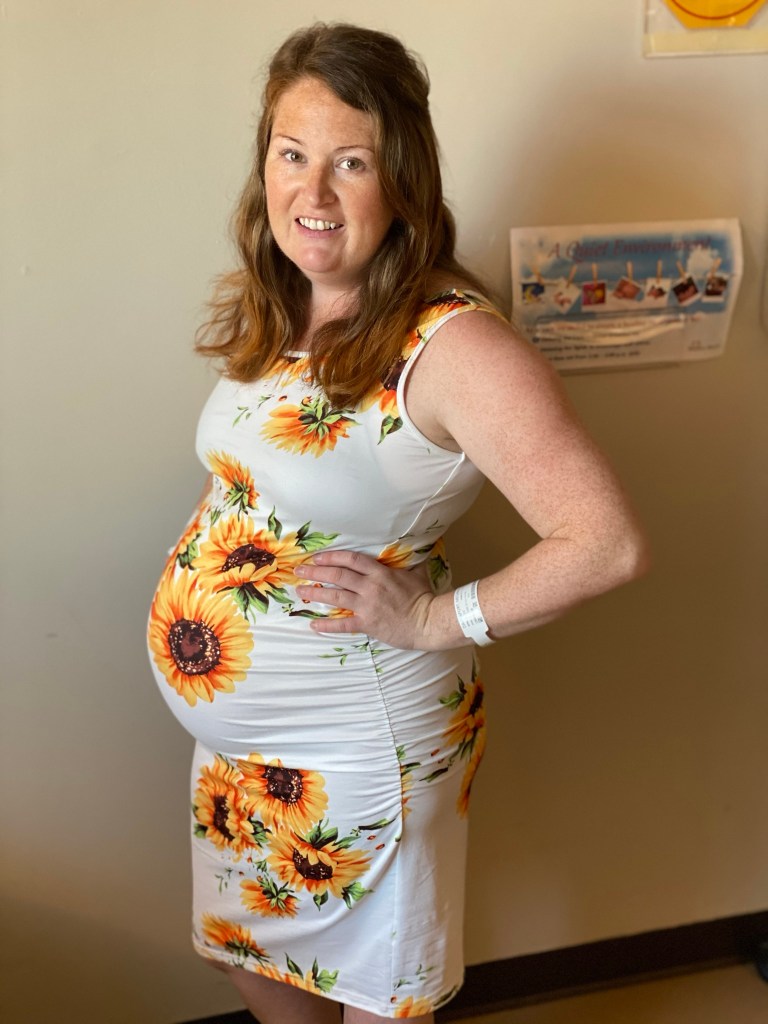
The morning Sunny was born. I never got to do a maternity photoshoot, so my sisters helped out!
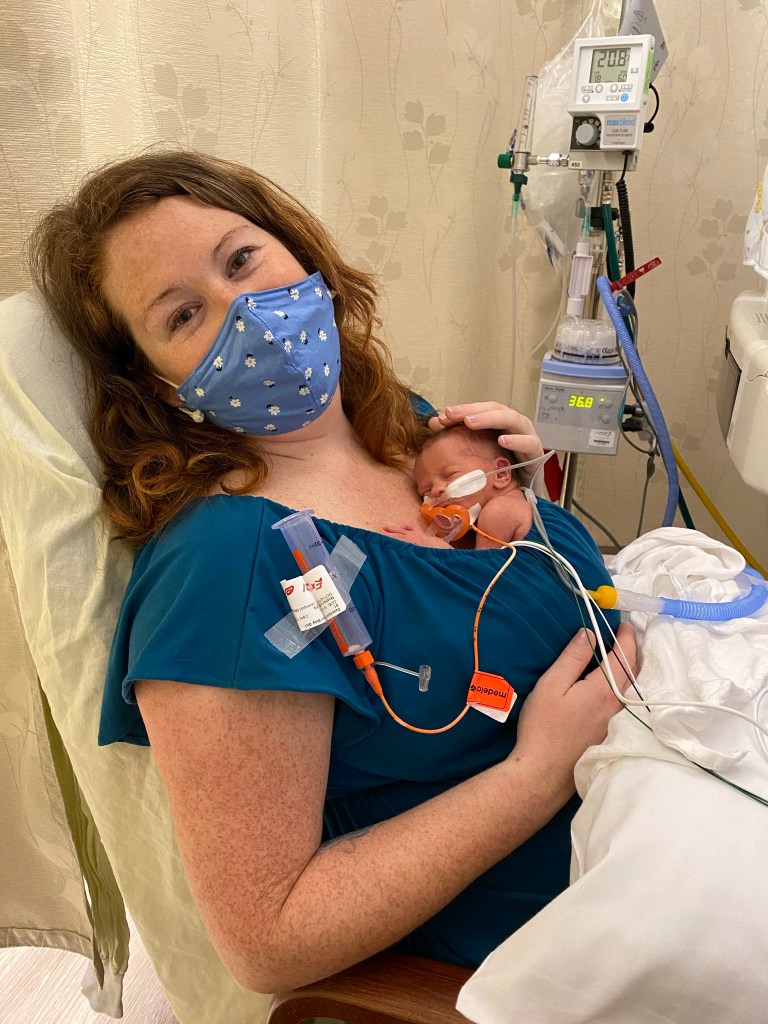
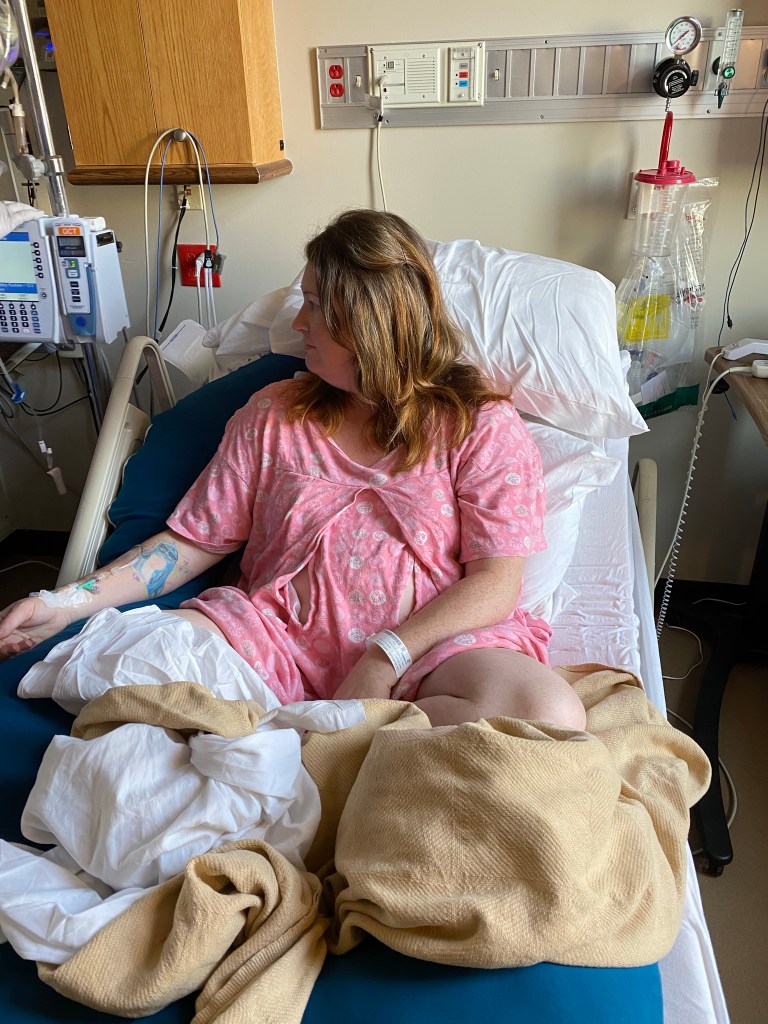
Wow – the video below was taken 2 weeks before Sunny was born, recorded April 30, 2021. When other people remember Sunny’s birth, they sometime say it was “traumatic”. I do not remember it this way. After my initial shock, I accepted the course of things, and thought that I felt only excitement and resolve. Motherhood felt natural in every single way. (Doing the rest of the things in my life wasn’t as easy). But as I look back, I’m trying to curiously examine why it didn’t FEEL as traumatic to me as others might have seen it. After all, I ended up hospitalized for 16 days, had to undergo an emergency c-section, had my first 23 days of parenting happen in the NICU, and might have suffered longer-term damage to my heart. So maybe it’s time to re-examine this event. Not to look for the trauma, but to look for the ways that I may have compensated for any of it, and to examine which of these coping mechanisms may still be lingering around.
Early in my pregnancy, I had booked OB-GYN services with a woman who had a billboard off of Mount Rushmore Road, only 5 minutes from my house in Rapid City. She had a vibe of “power doc”… tough, no bullshit, kind of busy and fancy-looking, somehow. She had gotten good reviews when I researched her online, and the fact that it was so close to my house interested me. But as the pregnancy went on, I started researching other options, and happened upon something that immediately captured my attention. There were a set of midwives in the Rapid City area who practiced home births. Their pictures exuded so much warmth and love. The mothers featured on their website were absolutely glowing, even while floating naked in their bloody afterbirth (lol). I was immediately captivated, and emailed right away to inquire about their services.
To further solidify my feeling that this was meant to be, the two midwives were currently partnering with one of the hospital OB-GYNs to open a new birth center, also 5 minutes from my house! It would have all of the advantages of being able to have a “natural” birth, but they had a great partnership between them, hospital privileges, and even if an escalation of medical needs were to occur, the midwives could still be very involved. Their partnering doctor was very respectful and supportive of upholding women’s’ birth plans, integrating doulas, and supporting other deviations from standard hospital births. It was meant to be!
Waiting for surgery, May 14, 2021
Fasting forward, I had gone through the whole pregnancy working with Cassie, and very excited about the idea of a birth in the new birth center my midwives and doctor had built. I had read Ina May Gaskins book “Ina May’s Guide to Childbirth”, envisioning how I would channel my inner goddess, find strength from within, not fall prey to the fear that western culture had instilled in conventional birth stories.
Then one day, I went in for a biweekly check up, and had a high blood pressure reading. If I remember correctly, I had to come back the next day to recheck. I tested high the second time as well, and when that happened, everything changed. My midwife’s face sunk into a sympathetic but resolved look, and she said, “You’re going to have to go to the hospital, right now”. And then, she said, “Unfortunately this is going to preclude you from a birth at the birth center”. The details here are blurry, but the next thing I remember was racing down to the hospital (ok, I’m sure I was actually going the speed limit), calling my sister, and crying, thinking that my chances of that beautiful, birth-center birth were now flushed down the toilet. It felt so final, like a sentence. I also immediately felt shame (not in any way from Cassie and the other midwife, who were fantastic and supportive the whole time!).
Let’s go down this rabbit hole for a moment – I’ve only gotten a little more skilled at identifying the “shame” feelings lately, as in, the past few months. I’ve realized that for whatever reasons, I have a lot of internalized shame and self-negativity surrounding weight, fitness, and health. My “sentence” to a hospital birth immediately made me feel ashamed – that I was over an ideal weight for most of my life and hadn’t lost enough to eliminate risk factors (I was about 175 and 5’4”), that I hadn’t exercised enough (though I tried hard to walk every day, do prenatal yoga, and more), that I hadn’t eaten healthily enough (though I tried hard to, read multiple books and never drank and rarely ate processed food), that I handled stress poorly and thus was causing my own gestational hypertension. The list goes on and on…
Reflecting now, driving down to the hospital, I may have felt more shame than I noticed at the time. That “something was wrong with me” for not being healthy enough to evade a medical pregnancy. In reality, the concept of being “healthy enough” has always evaded me in thought. I know this is the wrong mindset to have. A moment comes to mind when I was pursuing my masters degree at University of Miami. I was scuba diving every day, exercising a good amount, energized with the vibrancy of living my dream life as a marine biologist, and handing my friend a pair of pants to try on that had become too big on me. I swore to her they would not be too small on her because in my mind, she was skinny and I was fat. I remember handing them to her and her saying, “Megs, you’re crazy, these are not going to fit me… they’re going to be too small”, and me being genuinely perplexed. Even during this period which was likely the most physically active and healthiest in my life, I was unable to see myself as a heathy person.
The idea that gestational hypertension, and any additional health complications, as something to be ashamed about, is deeply flawed. So many factors may affect the development of complications during pregnancy, and yes, there are some risk factors (meaning correlated conditions prior to pregnancy, with no understanding of whether those relationships are causal, coincidental, or whether the “factors” and “results” may be both rooted in something else entirely). The truth is, very little is actually known about what causes the disease, or even what the mysterious placenta, the organ that seems to cause it, does. But as I’ve learned to quiet the external noise in my mind these last few years, I’ve become more cognizant of the MEAN little inner voice that says “you’re too fat”, “fat means bad”, “fat means shameful”, or, “you’re worthless if you don’t look a certain way.” OUCH!
Does True Meg believe that fat = shameful, and that body size dictates one’s worth? Hell to the fucking no!! So why am I feeling/hearing this? Why is SHAME the resounding negative feeling when I look back on my pregnancy, and any how did I cope with the shame I was feeling, to the point where I didn’t even notice it at the time???
So today, in 2025, I’m trying to approach that mean little voice with curiosity, learn to tame it, and earn its trust before I can turn around and interrogate it, “Why the hell are you saying this stuff?! Why don’t you shut the heck up!” JK – that’s probably not the best way to “heal” this inner part of myself. I’m not really sure what I’ll do when I find it, but I know that right now, just being able to HEAR it clearly is an advancement for me.
So now, let’s watch a video of my first day or two in the hospital. In the end, I was hospitalized for 16 days. Sunny was born by c-section at 32 weeks, weighed 3.5 pounds, and spent 23 days in the NICU. But that is a story for another time. We ended up being just fine. We were remarkably lucky that she had no health complications, and that we got to go home when she was around 35 (gestational) weeks old.
Sweet swollen bed-ridden Meg, terrified Mack, and our early journey into parenthood.
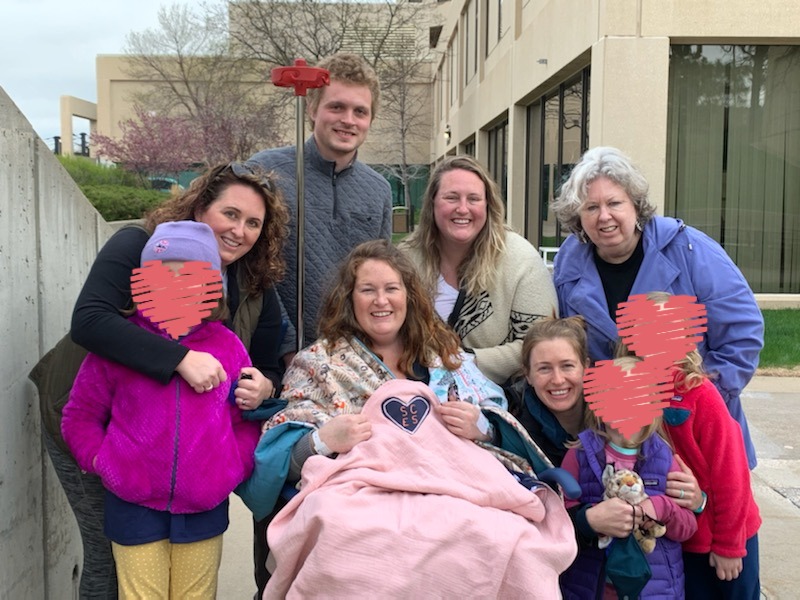
There are plenty of other things to process in looking back on this event… How terrified Mack looked in this video, and how I seem to be barreling through with positivity. How my sisters, mom, and nieces showed up for me. How friends showed up. How relatives (Mack’s and mine) all visited and helped us prepare the house and care for the dogs, while barely getting to see Sunny because the NICU restrictions (and our own anxieties during COVID) were so strict. How I entirely missed the third trimester… and still long to experience a full pregnancy. My sadness that our marriage has not survived the years of early parenthood, and how where we both are now is different from where we thought we’d be then. My lingering concerns over health problems, especially related to my heart.
But right now, I’ll leave it here. I’ll consider it an improvement that I’m able to look back with a bit more clarity, see if I can start working on that little meanie voice inside my head, and thank my lucky stars every day that my little monkey arrived safe and sound.
My hospital baby shower, where my sisters and mom surprised me, and the nurses let me off of bedrest orders and outside for 10 minutes during my 16 day stay. This photo always brings me to tears.
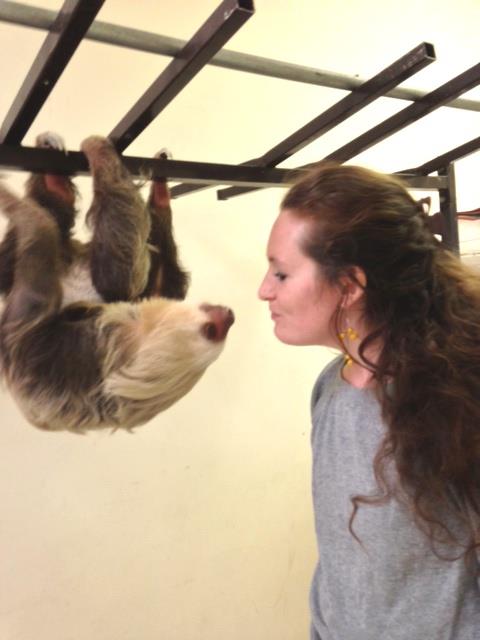
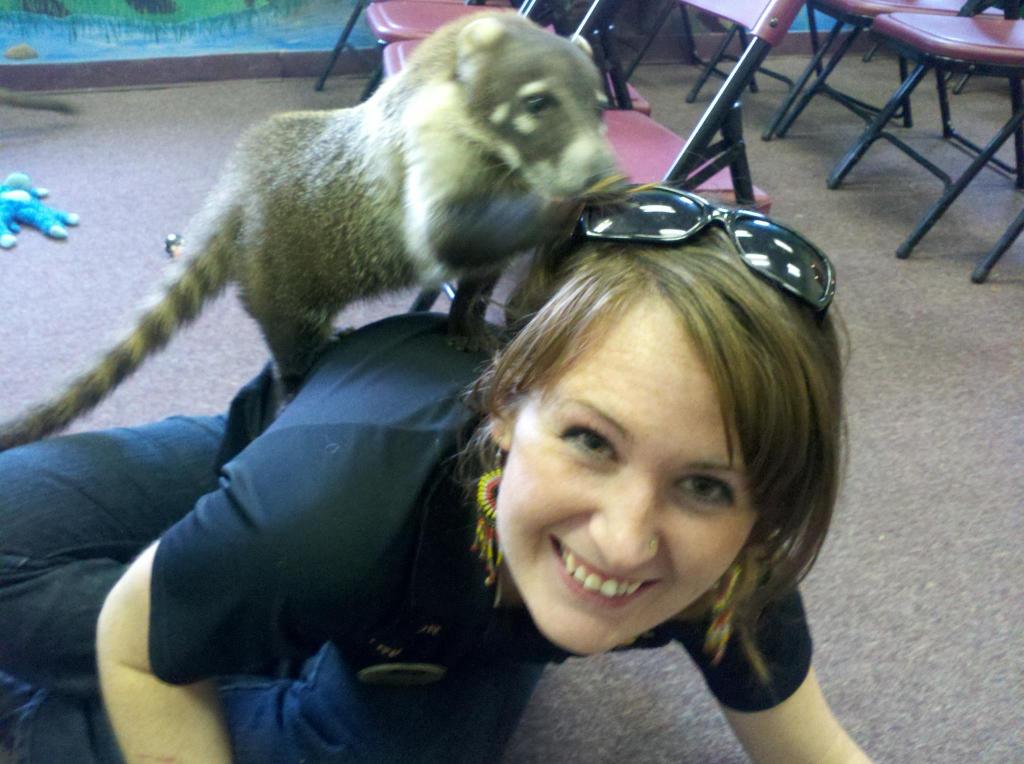
This is some writing I did back in 2012, when I was working for the Staten Island Zoo in New York. It was a dream in some ways, but I had felt a constant tension between the vital role they play in offering access to nature for all people, and the ethical implications of keeping wild animals in captivity. It’s a tension that has really never gone away for me, and it’s fun to revisit this writing. It also highlights one of my resounding philosophical interests – understanding how people connect with animals. As someone who’s major dream of a superpower has always been talking to or transforming into animals (to hang out with them – duh!), I’ve always been fascinated by the people whose lives revolve around animals. This was part of a setup for a documentary series. YouTube series, anyone? When I sent it to my dad, he said “Keep going. You never know where it will take you”. It’s fun to revisit that very sparse, dad-like (but sound) advice now.
Written by me and sent to my dad and a few trusted friends, 2/21/2012
This past fall, I got a job at the Staten Island Zoo. Being an avid animal lover, scientist, and teacher, I was thrilled to get my foot in the door of the Zoo-niverse. Now, as anyone who knows anything about zoos will tell you, the animal business is riddled with social, financial, ethical, conservationist, and scientific controversy.
Is it right to keep wild animals captive? Which animals are suitable for this? How much space do they need? Should keepers and the public be allowed to interact with them? Should animals participate in entertainment shows for the public? Is it right for animals to be “on exhibit” all the time? Does it serve a purpose? Are zoos really an effective conservation tool? Can zoos make money and still put animal welfare first? Can people learn to care about wildlife without seeing animals in person? Are zoos “practicing what they preach” and functioning as sustainable, environmentally-friendly businesses? Should zoo animals ever be “retired”? If so, where do they go? Can and should captive animals ever be returned to the wild? Should zoos breed wild animals, and if so, for which purpose?
The list of questions goes on and on, and the response to each can continue for even longer. Any business (for-profit or not) that keeps wild animals has the ethical and moral obligation to seek answers to these questions. Unfortunately, the zoo business is often found to be conservatively unchanging, filled with an inertia based on self-preservation. All too often, there’s an “if it ain’t broke, don’t fix it” attitude permeating the bureaucracy of zoo boards and upper management. Mix that with hard economic times, a constant struggle for funding, and (sometimes stubbornly) passionate employees, and changing zoo policy quickly becomes like wrangling a banana from a bunch of hungry spider monkeys. (Told you I was a nerd)
As a young animal lover trying to carve out my place on this planet and make a positive, progressive contribution to the world, I started doing research. To really understand the business and find room for improvement and trends, I dove into my zoo’s library and began reading everything I could. This led me to the recorded history of my zoo, which was at times both progressive and wildly popular.
The Staten Island Zoo, inaugurated in 1936, has a fascinating history of zoological firsts, unique animal collections, longevity records, and educational initiatives with multiple years of zoo attendance over one million, which is remarkable for an 8-acre institution. It was one of the first zoos to highlight a reptile collection, was proud to employ the first full time female zoo veterinarian in the country, and was one of the first zoos to incorporate Education into its mission statement. (Ken Kawata’s New York’s Biggest Little Zoo makes great reading material). Through this book, I learned an important lesson:
Zoos have to constantly change in order to remain relevant.
At all times, zoos have a multitude of pressures, constraints, limitations, and expectations to which they must respond. The order of importance is not to be based on the order in which I list them, because of course, like all businesses, their priorities depend on who’s in charge, and who’s paying the bills.
Animal Welfare: Zoos of course are charged with the health and well-being of their collections, which is zoo-speak for the animals they keep. They are subject to international, national, state, and local laws governing animal welfare, as well as the scrutiny of accreditation organizations. In the US, this means the American Zoological Association, or AZA. And this is no simple matter, either. There are many schools of thought on the care and well-being of many different animals, and many different definitions of what that even means. A lot of husbandry knowledge is passed down within institutions from weathered keepers to the newbies, and although communication between zoos is better than ever, much of the knowledge is “industry secret”. Besides the fundamental ethical reasons for keeping animals healthy, zoos have to consider medical costs, losses occurred from replenishing animal collections, and public perception of their animal care.
Money, Money, Money: Whether for-profit or non, all zoos struggle with finances. The cost of operations are exorbitant. You know how much it takes to feed one kid? Imagine hundreds or even thousands of hungry mouths, all demanding healthy, fresh fruits and vegetables, tons of raw meat, specialized animal prepared diets, vitamins, minerals, and supplements. Then imagine the cost of cleaning supplies, utility bills, waste disposal, and keeper salaries (which, by the way, are some of the lowest in the institution!). Add the price of animals (which can run in the double-digit thousands), medical bills, insurance, maintenance and operations staff, and administrative salaries. The San Diego Zoo (granted, a humongous institution) spends 150 million dollars a year on operational costs alone.** (Note: These numbers are from 2012!) This is completely separate from capital improvement projects, which run in the millions and up, and include improvements to exhibits, grounds, buildings, and infrastructure. Zoos get funding from local governments and private donors, but the big money mostly goes towards capital improvement projects. Much less donor money gets allocated towards operational costs, so zoos are always scrambling to be self-supporting, even if only partially. **
Attendance: I was once told by a wise and well-respected herpetologist (Romulus Whitaker) that “Conservation is 90% circus and 10% science.”** Now, some zoos are more “circus” than others, but what this really means, is that the most important part of the zoo business is people. Zoos without people are merely private animal collections, and though they may satisfy the needs of the individual animals, they do nothing to affect public opinion or the welfare of animals in general. Increasing attendance is the backbone of most zoo decisions, present in everything from animal acquisitions to exhibit design, zoo cafe food offerings to special events and educational programs.
Regulation And Accreditation: To gain the respect of the industry and (often) of the public, zoos must be in compliance with a number of international, federal, state, and local regulations, as well as the animal management policies from the AZA and other accreditation organizations. Remember how there are many opinions on the ways to care for animals? This means that zoos, in many cases, must be constantly adapting to changing regulations and management policies.
Governing Bodies: Most zoos have zoo boards, which hold the highest authority within the institution. Oftentimes, these upper administrative positions are filled by “non-animal” people. People from the marketing, financial, and business sectors can often be seen filling the zoo Director seat, and even more often on zoo boards. This is necessary, to an extent, as they contribute a vital business perspective to maintaining a successful zoo. Things can get sticky, however, when animal-related decisions fall under the jurisdiction of “non-animal” people. And since passions run high when it comes to animals, there is often a difficult disjoint between upper management and the keepers.
Employees, Interns, and Volunteers: Volunteers and interns are absolutely vital to the zoo business. Zoos would not be able to afford the number of employees it would take to run a zoo without them, and since many people love animals, work comes cheap. Docents and other zoo volunteers will work without pay to help out a cause they care for, and especially for the chance to be around wild animals to which they would otherwise have no access. It’s a fair trade in some ways, though I don’t believe in working for free. Opinions aside, to get a zoo to function successfully, a wide range of personalities, passions, and needs must be met. A successful zoo is truly a well-oiled machine, which relies in some way or other on each of its parts.
Conservation: Zoos have the responsibility of being, if not literally, at least for appearances sake, the vanguards of conservation. They are all-too-often considered the “experts” on animal welfare and conservation, though in all honesty, few zoos participate in wildlife research or conservation projects outside of their perimeters. Many zoos have animals in “Species Survival Programs” (SSP), which means that the animal’s genetics are monitored and any breeding is closely controlled to protect genetic diversity and prevent inbreeding. Even with breeding programs, however, very few captive-born animals are ever returned to the wild.
On top of these concerns, (which in reality are only a fraction of what zoos must manage), zoos nowadays already have a number of issues. For example, it is getting more and more difficult for zoos to maintain and grow their attendance, especially in a hard economy.
Zoos have to compete with television and the internet. People can go to YouTube and watch a million HD videos of any animal they can think of. They can read about them on a million websites and access scholars all over the world with the click of a button. Is it possible that zoos have lost a chunk of attendance to the internet? They certainly will in the future, if it hasn’t happened already. And at the very least, zoo patrons are now harder to impress. If this is the case, what would it say about the future of zoos?
Follow this logic. If zoo attendance went down because of the internet, then zoos were only providing what the internet can provide, which is a virtual experience viewing an animal behind glass (or a screen). It follows that zoos, or aspects of them, are replaceable by the internet and lacking anything that a computer can’t provide, which is simply visual stimulation of a simulated scene.
If technology has caught up with society and made something obsolete, then society should evolve. This is progress. This is evolution. And the time has come for zoos, and our relationships with animals, to evolve.
________________
With the daring confidence of my prediction and prognosis, I am left in return, a giant question. What is an evolved zoo? What is the future of the zoo, and how do we want to express our relationship with nature to our children? To answer this question, we have to look deep. We need to understand the function of zoos in our society today, and what we want their function to be in the future. We need experts in the animal world: people who observe them in the wild, people who keep them in captivity, people who care for and study their physical, mental, social, and emotional needs. We need to study habitats and the greater connections of the ecology we affect with zoos. We also need to look at the way people learn, and the factors in our society that conflict with a positive relationship to the natural world. Mostly, we need to look to nature for the model.
Follow me as we interview scientists, zoologists, psychologists, conservationists, environmentalists, educators, and more on this journey to answer the question, What is the evolved zoo? What is our modern alternative to animals-on-display, and what is the future of our relationship with nature?
In my last post, Why Are We Here, I mentioned my revelation that as things calm down for me post-divorce and ten thousand other life changes, I begin to realize that I may not even know what “the dust has settled” looks like. In the chaos of the last 10 years, I may have grown accustomed to living in the tornado. The emotional turmoil of deaths, moves, births, marriage, divorce, career changes, relationship changes, and external world chaos have become normalized for me. I’ve may have gone from “event” to “event” without letting the dust settle, and in doing so, might have neglected many parts of myself.
Luckily, I have spent a good part of my adult life writing and documenting. I have always followed a drive for adventure, saying yes to opportunities and (to a weird extent) relishing new and sometimes uncomfortable experiences. To share news of the adventures with friends and family, I’ve had various blogs, journals, social media profiles, photo accounts, etc where I’ve documented much of my life. I’ve come to realize that these things are an asset – a gift from my prior self to my current self.
Though some of it is cringeworthy, I am currently focusing on the desire to revisit all of it. It’s all part of my story, right? It’s so tempting to think of ourselves as just the current version. I’m 37; I’m a divorcee; I’m a mother; I’m whatever-this-current-version-of-my-career-is; I’m sad a lot; I’m optimistic about the future… etc. But wouldn’t it be much healthier if I could hold all of the versions of myself with love and compassion, and let their complexities intermingle into something far more beautiful and real? To stop tunnel-visioning myself with whatever I see in front of me, and start recognizing that I am a goddamn infinite being that’s here for who-the-hell knows why, getting to experience all of the joys, sorrows, laughter and lessons that life on this planet has to offer?
Other reasons I will “process” by revisiting past writings include:
It rebuilds landmarks in my brain: By reading my first-hand accounts of moments while I was in them, I can start to get a relative feel for which moments were seminal, in which ways they have defined me, and in which was I may still be hanging on to unprocessed parts of them. I picture my brain (and its relationship to my past) as a foggy landscape. My hope is that by revisiting each moment, the landmarks will become more defined, and I will be able to navigate more of it with ease.
It allows me to revisit departed loved ones and relationships: In the last 10 years I have lost both parents, all four grandparents, and had more than a few broken hearts. I have also had friendships fade out of my life for reasons I don’t quite remember. It makes the past so much more vivid to be re-reading words I wrote when they were alive. It’s not that I need to dwell there forever, but it’s nice to have places to visit.
It honors the woman I once was and remind me of parts of myself I have long forgotten: Oh wow, sometimes reading old stuff really reminds you that you’re not just the “you” from today. At different times in my life I was wildly adventurous, fervent for knowledge, not terribly cautious or calculated, extremely outgoing, and sometimes irresponsible. Among many other qualities, these things have tempered over the years. Though balance is great, it’s fun to revisit the raw and unfiltered me.
It’s healthier than scrolling: Like many people on the planet, I’ve found myself absolutely horrified to see my “screen time” hours creep up to the equivalent of a part time job, and with activities that do not serve me. I’ve spent hours of my life doomscrolling and searching endlessly for cheap land/cute houses/trendy lifestyles or any other number of things that just lead to comparing myself to others and creating an endless cycle of dissatisfaction. I’ve worked really hard in the past year or so to disentangle myself from as many of these negative habits as possible. But as my wonderful friend Gwen passed onto me from her mom, “when you feel the need to consume, create!” It feels like really sound advice, and an antidote to many of the things that keep us addicted to consuming online content. (Screw you, internet overlords! Kinda, lol).
It may help me find myself: Well yes, let’s all cringe together, now. But it’s true. I know of at least one life change that makes one forget who the heck they are and what the heck they are doing (parenthood!). Combine that with the confusion of divorce (oh, everything I thought I knew was off track and where I was headed is no longer where I am headed?) Back to the drawing board! And even without these major changes, we grow, we mature, we change. It’s a good time to re-evaluate the big questions before moving too far forward. And because I’m a major external processor, I’ll be thinking those things “aloud” through my writing.
So let this blog be my charcuterie tray where I can gather, pick up and examine, and SMASH together all of the salamis, cheeses, honeys, and crackers of my past and hopefully combine them into something beautiful.
This collection of quotes and mini memories are from some of my past travel experiences… It’s been such a blast to revisit old writing and instantly transport myself!
I realized the world is so incredible weird and cool, that one day I could be living in NJ like normal, and then so suddenly find myself in a completely different universe (figuratively, that is). Get out in the world, people, see for yourself!
I literally had to will my legs forward while we walked around. I was in such shock it just felt like some bizarre dream. I’m not sure if I can really explain exactly what it’s like, but the best thing I can say is, it’s like seeing a movie with some incredibly exotic and unfamiliar place, but then finding yourself actually in that movie. Honestly, picture sitting on your American couch, watching a movie like “Indiana Jones” or “The Ten Commandments”, eating popcorn and drinking Coke, and then picture that you were sucked into the screen and find yourself walking around those dusty, hot, crowded, streets. It really feels like another time, here. It’s like nothing I ever thought I would be experiencing, and the coolest part is, it’s going to be my home for awhile.

 Exploring the Universe